


When in doubt, ask your piercer.
Professional piercers can often help identify and resolve common healing issues before they
become more serious.
Troubleshooting
Not every irritated piercing is infected.
Healing piercings can sometimes become irritated, swollen, or uncomfortable. Many common
piercing issues are related to irritation, jewelry fit, trauma, or aftercare — not infection.
Understanding what is normal, what may need professional attention, and when to seek medical
care can help support a healthier healing process.
Common Healing Concerns
While complications are uncommon, it's important to be aware of potential risks

Irritation
Common Causes:
-
Sleeping on the piercing
-
Touching or twisting jewelry
-
Pressure or friction
-
Poor jewelry fit
-
Harsh aftercare products
-
Overcleaning
Signs Of Irritation:
-
Redness
-
Tenderness
-
Mild swelling
-
Dry or flaky skin
-
Crust buildup
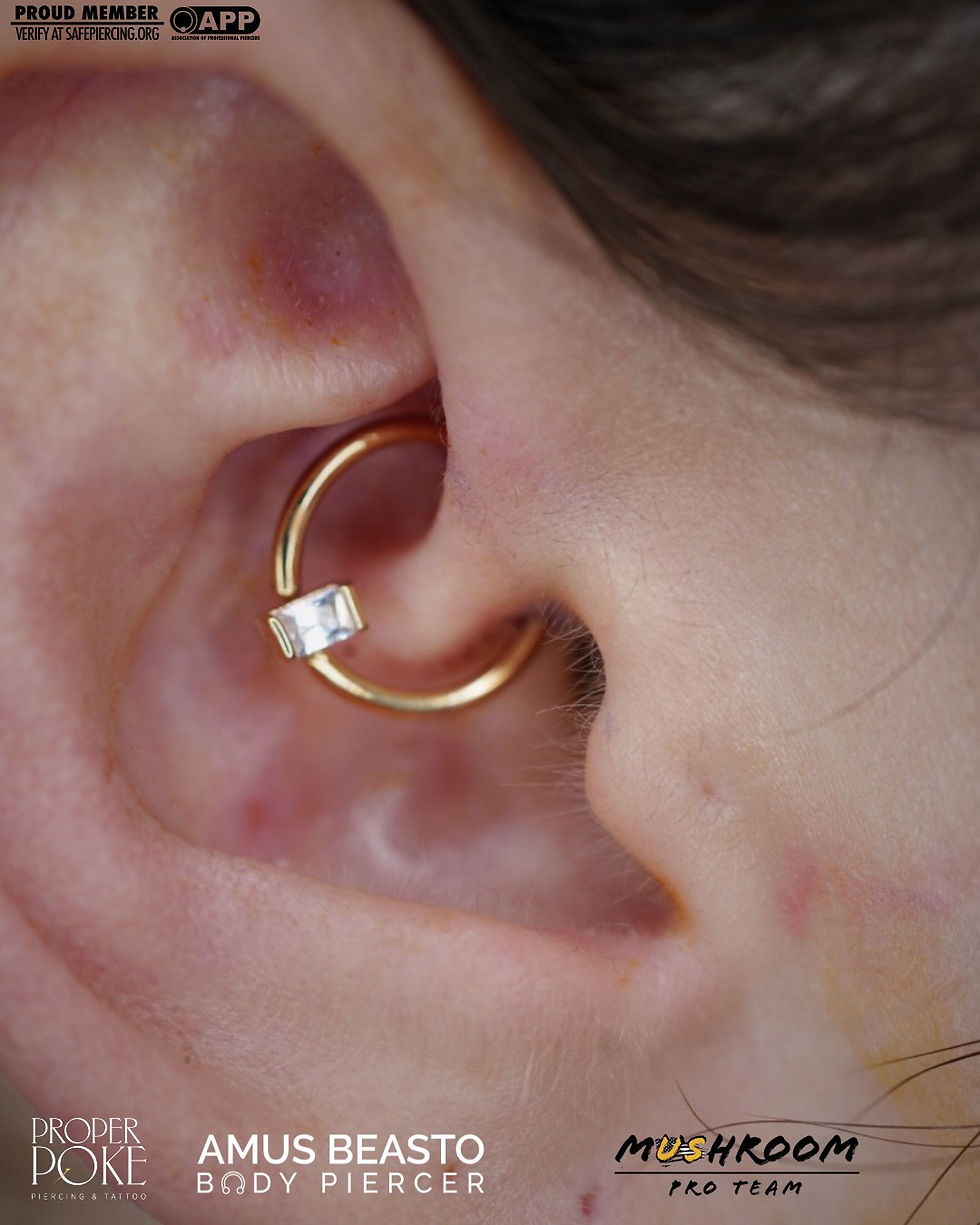
Swelling
Localized swelling is common during the early healing process and may continue intermittently during healing.
Oral piercings may experience more noticeable swelling during the first several days.

Crusting & Discharge
A small amount of whitish or pale yellow fluid that dries into crust on the jewelry is usually normal during healing.
This Is Usually Normal If:
-
The discharge is light in color
-
There is no strong odor
-
The area is not increasingly painful or hot

Piercing Bumps & Hypergranulation
Some piercings may develop small irritation bumps or excess tissue near the piercing openings.
Common Causes:
-
Pressure
-
Improper jewelry fit
-
Excess moisture
-
Trauma or movement
-
Incorrect aftercare
Many irritation bumps improve once the source of irritation is addressed.
When To See Your Piercer
Contact your piercer if you experience:
Persistent irritation
Jewelry feeling too tight or too long
Ongoing swelling
Difficulty cleaning the piercing
Repeated irritation bumps
Concerns about healing progress
Questions about downsizing or jewelry fit
A professional piercer may recommend:
Jewelry adjustments
Downsizing
Different jewelry styles or materials
Changes to your aftercare routine

When To Seek Medical Attention
Seek medical care if you experience:
Severe or worsening pain
Significant swelling or redness
Thick green, gray, or foul-smelling discharge
Fever or chills
Red streaking from the piercing site
Dizziness, nausea, or feeling unwell
Symptoms that rapidly worsen
Important:
Removing jewelry during a possible infection may sometimes worsen the situation by trapping drainage.
If possible, speak with both a healthcare professional and an experienced piercer before removing jewelry.
Important Piercing Facts

About Removal
Even well-healed piercings can shrink or close rapidly if jewelry is removed.

Most Problems Are Not Infections
Irritation, pressure, poor jewelry fit, harsh aftercare, and trauma are far more common than true
infections.

Harsh Products Can Cause Problems
Avoid:
-
Alcohol
-
Hydrogen peroxide
-
Ointments
-
Harsh soaps
-
Strong antiseptics
These products may damage tissue and delay healing.

Overcleaning Can Irritate Piercings
Cleaning too aggressively or too often may prolong healing and increase irritation.

Contact Dermatitis & Metal
Sensitivity
Some people may react to:

Low-quality
jewelry materials

Nickel-containing
metals
.png)
Harsh aftercare
products
Symptoms May Include:

Itchy Rash

Dry or irritated skin

Widespread redness

Increased sensitivity

Switching to high-quality implant-grade jewelry and simplifying aftercare may help reduce irritation.
Migration & Rejection

What is Migration?
Migration occurs when jewelry gradually moves closer to the surface of the skin.

What is Rejection?
Rejection occurs when the body pushes the jewelry
completely toward the surface.
Warning Signs:

The tissue between the piercing openings becomes thinner
Jewelry becomes more visible under the skin
Redness or irritation continues to worsen
Skin appears shiny, flaky, or stretched
The piercing appears shallower over time

If you suspect migration or rejection, contact a professional piercer as soon as possible.
General Troubleshooting Tips
CPPA does not recommend the use of piercing guns. They can cause more harm than good to your body's delicate tissue.

Leave It Alone
Avoid touching, twisting, or rotating jewelry unnecessarily.

Check Jewelry Fit
Improperly sized jewelry can contribute to irritation and delayed healing.

Reduce Pressure
Avoid sleeping directly on healing piercings whenever possible.

Stay Consistent
Gentle, simple aftercare is usually best.
Disclaimer
This information is intended for educational purposes only and is not a substitute for medical advice from a qualified healthcare professional.
If you believe you may have an infection or serious medical concern, seek professional medical care.
Portions of this information were developed using publicly available educational resources from the Association of Professional Piercers and adapted for CPPA educational use.

Piercings & Medical Imaging
X-Rays & MRI Scans
Body jewelry may sometimes interfere with medical imaging depending on the procedure and piercing location.
Whenever possible:
-
Inform medical staff about your piercings
-
Speak with your piercer before removing jewelry
-
Consider non-metallic retainers when appropriate
Even temporary jewelry removal can result in rapid closure of some piercings.
_edited_edited.png)